Introduction
In this part we’ll understand the concept of filters.
Filters
We usually use filters for two different purposes:
- Frequency elimination
- Frequency detection
Example 1
Say we have the following system:
What type of filter is this? Let’s find out. Plotting the bode plot will help us.
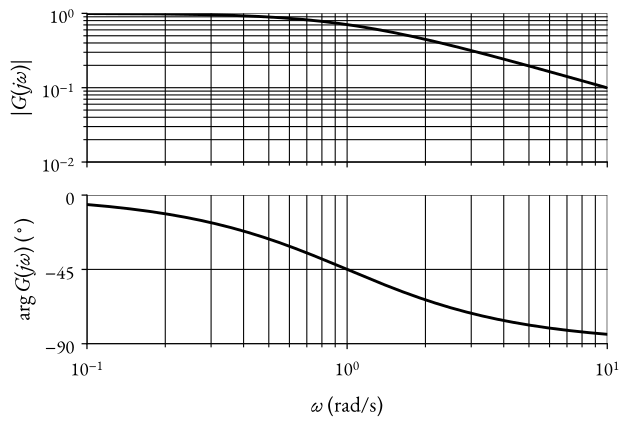
Note: This is for
We can see that this is a low-pass filter! We will call the part that lets through the frequency for passband. The range that gets eliminated/attenuated is the stopband.
For a high-pass filter, the general form is:
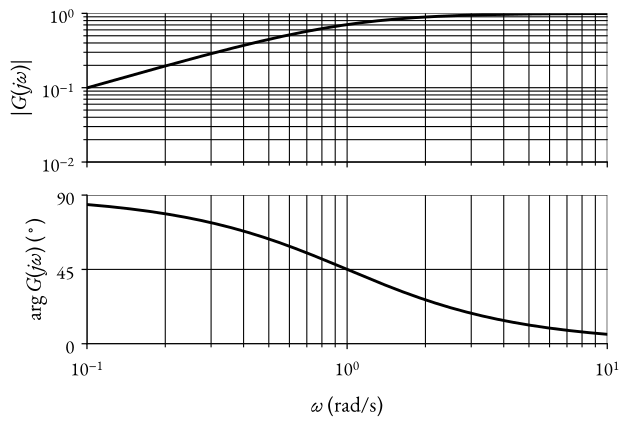
Note: This is for
Filter types
So far we’ve seen low-pass and high-pass filters. Let’s list all the filters that we’ll work with:
- Low-pass (LP - low pass, high gets filtered out)
- High-pass (HP - high pass, low gets filtered out)
- Band-stop filter (BS - frequencies within a specific range gets attenuated, rest are unfiltered)
- Band-pass filter (BP - frequencies within a specific range pass, rest are attenuated)
- Notch filter (Filters exactly one frequency)
Butterworth filters
When we need to perform filter realization, we usually will resort to Butterworth:
Filter transformation
Say we have this filter:
This is a low-pass filter. Say we want another type of filter from this - what should we do?
- Switch of break-frequency point to (cut-off)
Say we want to go from LP HP, then we need to set:
In the case we had a second order filter: